Townandaround.org.uk
December 2019
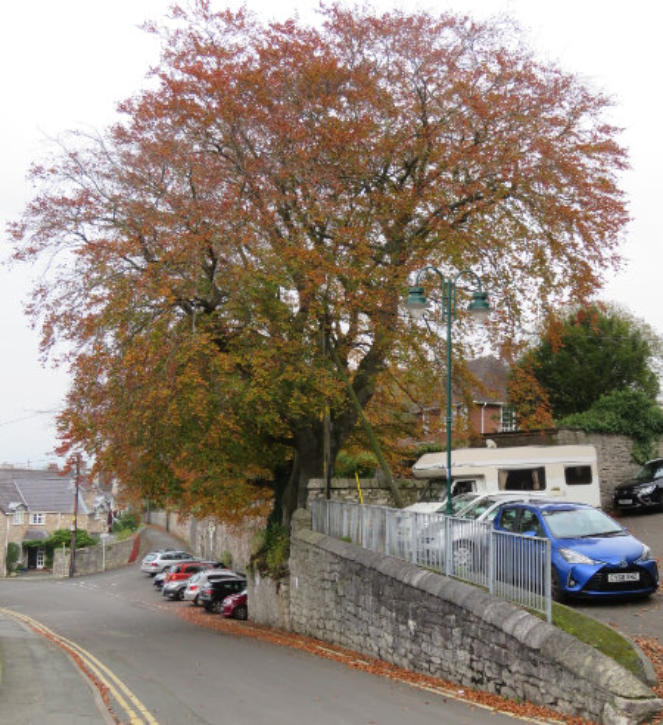
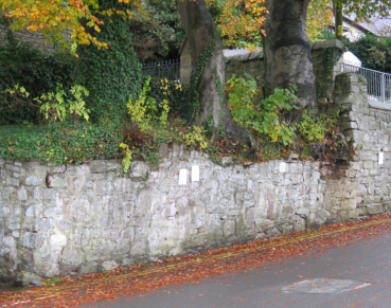
What’s the Story behind these Trees? “Everyone must leave something behind when he dies, my grandfather said… something your hand touched some way… and when people look at that tree you planted, you're there”. So said science fiction writer Ray Bradbury in one of his novels. A legal notice dated October 9th, 2019 condemned three prominent Prior Street beech trees to firewood. The axe has yet to fall. Most people recognise the trees as being of some significance. But what is their story? When people look at them, who did they think of? As Bradbury’s fictional grandfather might’ve said, who was there? First, some modern-day context. The trees threaten the safety of road users. Their shallow roots continue to push against their retaining wall (which, itself, has been repaired on several occasions). Damage is evident, from dislodged and displaced stones to cracking to wall joints. While the three are on private land, it is nevertheless incumbent upon the highways authority to take action. The trees stand on a small purpose-built enclosure between St Peter’s cemetery and Prior Street. Many assumed this is church property. Not so. The reason for the legal notice was that the highways department undertaking the work could not ascertain to whom the small parcel of land belongs. Records showed that it is unregistered. Local historian Gareth Evans felt that it was possibly once part of the residual manor of Ruthin but that is not confirmed. If so, it is actually believed to have passed to Denbighshire County Council. St Peter’s verger, Ken Hawkins, also thought that the land once belonged to the Castle. What makes these trees special is who was believed to have planted them. Many years ago, Hawkins was told that it was the Cornwallis-Wests who in the 19th century undertook significant tree planting around and about the Castle. Could it therefore have been George Cornwallis West MP himself? It’s possible that the three trees were significant in that they are in memory of three sisters, presumably relatives, presumably Conrwallis-Wests. Some also say that the three were planted by frequent Castle visitor, the energetic Edward, prince of Wales, the future king Edward VII. If not Edward, he was believed to have been in the party at the time of the planting, at least according to the photograph of the event in Ruthin Castle. If so, this dates the ceremony to between 1841 and 1900. Edward succeeded queen Victoria as king in January 1901. Either way, the three on Prior Street are quite probably trees of some significance and antiquity. Irrespective of any royal connection, they’re nevertheless only trees, after all. They would have had a finite lifespan. And trees can be replaced. Indeed, an enterprising Civic Association committee member had already collected a quantity of beech nuts from the three trees in the hope that at least one will germinate (though this is hard); and uprooted several small saplings under the existing three before any application of herbicide to the residual stumps. That way, the royal trees—if that’s what they are—will not be forgotten… assuming their offspring propagate. Perhaps future generations—like Bradbury’s grandfather—might again look on the trees’ successors and wonder who planted the originals and who was there. There are other wall-hugging trees that at some point will undoubtedly need to be felled. Several on the Castle side of the Cunning Green and lower down the Castle wall are weakening their adjacent structures. There’s a similar situation with a large beech next to the wall on Dog Lane, also on land in private ownership.



Town and Around
Current Edition | Archive 2013 – 2019 | 2003 – 2018 Collection | Historic Interest | Write for Us Support our Work | About Town and Around Brought to you by the Ruthin & District Civic Association
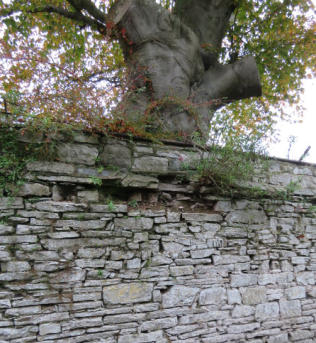
Tree causing wall
damage at Dog Lane