A Bridge to be Admired & Treasured
Traditionally, rivers divide communities. Witness
the antipathy of north Londoners by those who
live south of the Thames and I wonder how
citizens of Conwy feel about residents of
Deganwy, and vice versa. Bridges, on the other
hand, are connecting links. In today’s
predominately motorised world, bridges are
frequently the daily causes of traffic hold-ups,
and delays to our journeys, rather than being a
means of crossing an important local landmark,
a river. We need to get out of our cars and look
and admire our bridges, and around Ruthin we
have some very worthwhile specimens which
warrant a second look.
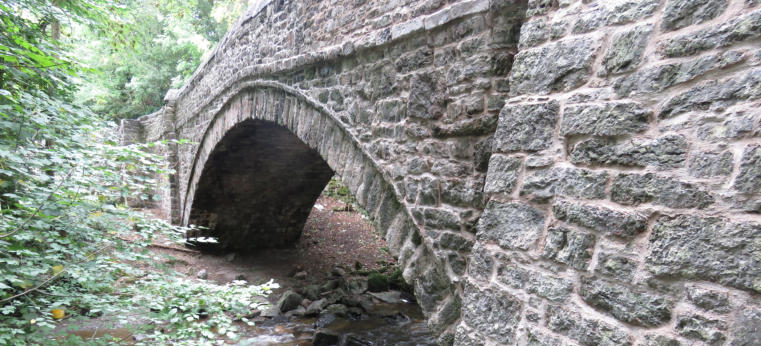
Living in Llanfair DC, I am prejudiced in favour of
the delights of our bridge over the Clwyd down
the hill towards the Corwen Road. It has been a
favourite spot for me to visit for years with the
grandchildren. We would clamber around and
splash about under its magnificent vaulted arch
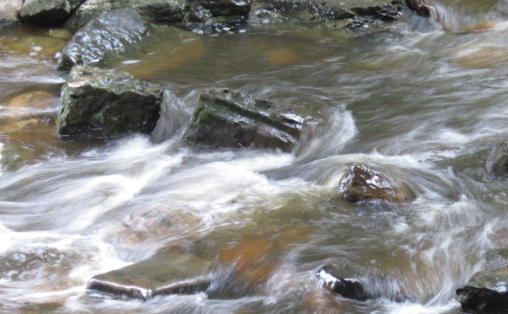
that spans the river. At most times, it is a
pleasant enough pretty river running through a
wooded landscape. But It was only in November
2000 that the River Clwyd flooded. On that
occasion, torrential dark brown flood waters
rose to envelop even the bridge’s
superstructure, so it should be treated with
respect.
l was surprised when I stopped there the other
day, to ask the construction workers on site,
exactly what they were doing, to be subjected to
a lecture on the qualities of the construction
and the workmanship of the original
stonemasons who constructed the bridge. They
also admired the stonework of the nearby old
railway viaduct, that is now just a romantic ruin
beside the river. And we reminisced on the days
when you could travel almost anywhere by rail,
even from Eyarth Station to Ruthin to do a
morning’s shopping or for children to go to
school. These men had obviously learned to
respect the products of the local construction
workers who had preceded them!
To give this bridge its proper name, it is Pont
Newydd, the new bridge. Documents in the
Ruthin Record Office record there being a need
to replace the former footbridge, Pont Eyarth, as
early at 1702. After inspecting a series of barely
decipherable handwritten proposals, I finally
came across one which detailed specifications
as to the materials and design to be used for
the new construction. It was dated 1785. These
included the sum of seventy eight pounds to be
dispensed on the construction of a road that
should be “'passable by carts and carriages”. The
old footbridge was no longer sufficient. The
work must be “Completed in a fine and
substantial and workmanlike manner on or
before the first of July next”.
Possibly the repair being carried out now is the
first larger scale repair since the 18th century
original construction. The current work is to
channel away standing water from the road
surface that has been draining into the main
structure, where, if left would eventually
damage the stonework. But once that has been
completed the original stonemasons’ work in
creating the magnificent stone vault over the
river and their fashioning of the tall, pyramidal
coping stones on the parapet walls—unique I
believe to Pont Newydd—will no doubt serve to
carry “carts and carriages” across the Clwyd for
many years to come. And, no doubt, all the
heavy good and agricultural vehicles of the 21s1
Century as well.
In December 2011,
MILES ANDERSON researched
Llanfiar’s “New Bridge” at Eyarth

Town and Around Current Edition
Town and Around Historic Contents
Contact Us
Ruthin Local Historic Society
Copyright © 2018 Ruthin & District Civic Association


